Why Do Toasters Toast Unevenly?
Quick answer
Toasters toast unevenly mainly because the heating elements are uneven: the wires are spaced apart, the ends of the slot run cooler, and a slice that is thicker or shorter than the slot won't sit at the same distance from the elements all over. Crumbs, a toaster that's already hot from the last batch, and bread that's uneven in thickness or moisture make it worse.
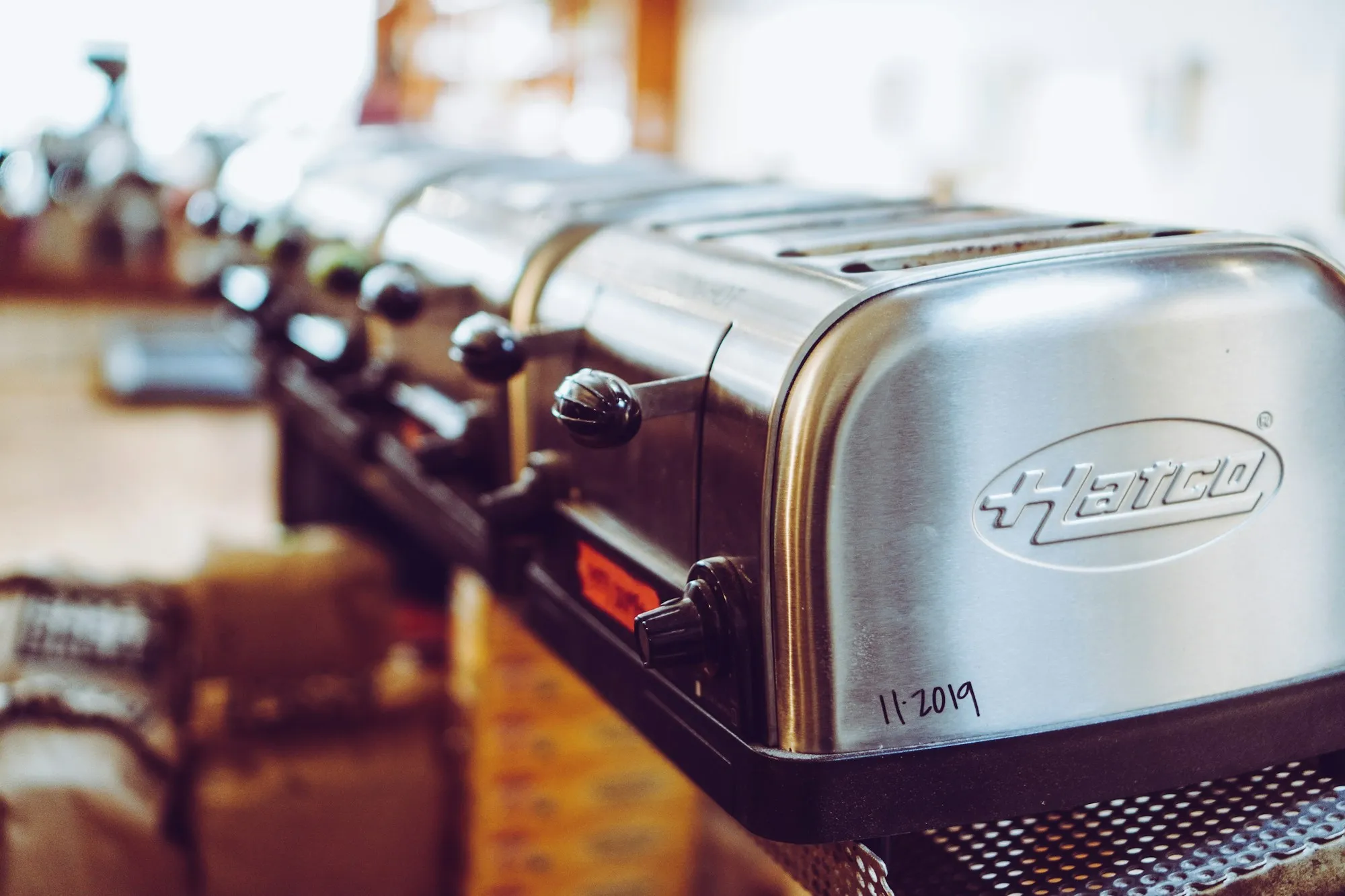
A pop-up toaster browns bread with radiant heat from thin resistance wires (heating elements) on each side of every slot. That simple design is the reason toast so often comes out patchy.
Why toast comes out uneven
- The elements aren’t uniform. The heat comes from wires wound across a mica or ceramic sheet, with gaps between them. Bread close to the wires browns faster than bread in the gaps, which is why you sometimes see stripes.
- The ends of the slot are cooler. Corners and edges often come out paler than the centre, and the top of a tall slice may stick out above the heated area.
- The bread isn’t centred. Self-centring guides are meant to hold the slice in the middle of the slot. If they don’t, or if a thin slice leans to one side, that side gets more heat.
- The bread itself varies. Homemade or bakery loaves cut unevenly, and slices with more moisture or sugar in places brown at different rates.
- The toaster is already hot. A second batch toasts faster than the first at the same setting, because the toaster has warmed up.
- Crumbs build up. Crumbs on the elements or in the tray can burn, smoke and block heat.
How to get more even toast
- Use slices of even thickness that fit inside the slot.
- Empty the crumb tray regularly, with the toaster unplugged and cool.
- Turn the setting down slightly for second batches.
- If one side is consistently darker, try turning the slice around halfway through on a lower setting.
- Choose a toaster with long or wide slots if you buy bakery bread or bagels, and check reviews or independent tests for evenness. Price alone doesn’t guarantee even toasting.
Why do toasters have a setting that burns toast?
The browning dial controls how long the elements stay on, through a timer (on most modern toasters, an electronic one). The highest settings are there for thick, dense or frozen items, such as thick-cut bread, rye or bagels, which need more time. On a thin white slice, the same setting will burn it.
The numbers on the dial don’t mean minutes. They’re relative settings, and a “3” on one toaster won’t match a “3” on another. Start in the middle and adjust.
What does the bagel setting do?
It toasts the cut side of a bagel more than the rounded crust side, so the inside crisps while the outside just warms. How it does this depends on the brand: some toasters switch off or turn down the outer elements, while others add extra time. KitchenAid, for example, says its bagel function reduces power to the elements on one side. Put bagels in with the cut sides facing the elements that stay on full power, as shown in your manual (usually facing the centre of the toaster).
The bagel setting also works for crumpets and English muffins.
What does the defrost button do?
The defrost button adds extra time to the cycle so frozen bread can thaw and then toast. On many toasters you can combine it with the bagel setting. Which? notes that some toasters want you to press defrost before lowering the bread and others after, so check your manual.
How long does a toaster take?
Usually around one and a half to four minutes, depending on the setting, the bread and the toaster. With a typical pop-up toaster drawing around 800 to 1,500 W, each round costs only a cent or two in electricity at the current US average rate.
Is a toaster oven or grill better?
A toaster oven, grill or broiler browns more evenly on one side at a time and handles large or odd-shaped bread better, but it’s slower and needs turning. A good pop-up toaster is the quickest way to toast both sides at once.