Why Do Hairdryers Have a Cold Setting?
Quick answer
The cold setting, or cool shot button, is for setting a style. Heat and water loosen the weak hydrogen bonds in hair so it can be shaped; cooling it quickly lets those bonds re-form in the new shape, so a curl or smooth blow-dry holds for longer. It's also a gentler option for finishing, though drying entirely on cool air takes much longer.
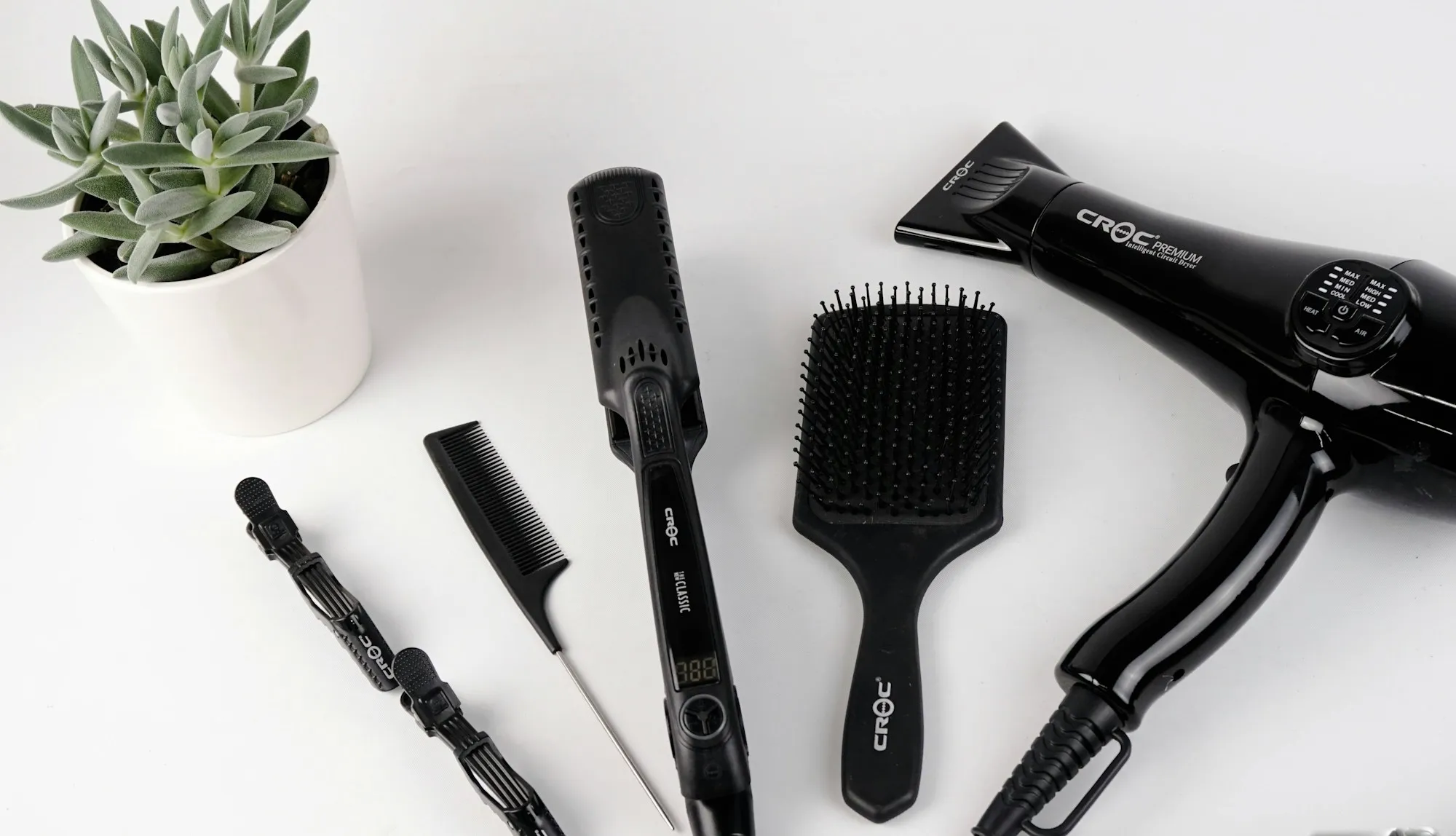
Most hairdryers have a button marked with a snowflake or “cool shot”. Pressing it switches off the heating element so the fan blows room-temperature air. It isn’t there to dry your hair. It’s there to fix the shape you’ve just styled.
How the cool shot works
Hair is made mostly of keratin, held together by different kinds of chemical bonds. The strong bonds only change with chemical treatments such as perms and relaxers. The weak ones, called hydrogen bonds, break when hair gets wet or hot and re-form as it dries and cools.
That’s what makes blow-drying work:
- Water and heat loosen the hydrogen bonds, so hair can be reshaped with a brush or round brush.
- As the hair cools in its new shape, the bonds re-form and hold that shape.
If you let go of a section while it’s still hot, it can drop before the bonds have set. A few seconds of cool air on each section once it’s styled locks it in place, so curls and volume last longer. Because these bonds also break with water, humidity or sweat will eventually undo the style.
Many stylists also say a cool finish leaves hair looking smoother and shinier.
Is it better to dry your hair with cold air?
Cool air is gentler, but drying from soaking wet with cool air alone takes a long time. Interestingly, leaving hair wet for a long time isn’t harmless either. In a 2011 laboratory study, researchers found that a hairdryer caused more damage to the hair surface than air drying, but that using a dryer about 15 cm (6 inches) away and keeping it moving caused less overall damage than leaving hair to dry naturally, which damaged the inside of the hair shaft. It was a small lab study on hair samples, so treat it as a guide rather than the final word.
A practical approach:
- Towel-dry gently first, by squeezing rather than rubbing.
- Use a heat protectant if you use heat regularly.
- Use medium heat, not the highest setting, and keep the dryer moving about 6 inches from your hair.
- Dry most of the way with warm air, then style and finish each section with the cool shot.
Can the cold setting damage hair?
No. Room-temperature air doesn’t damage hair. The damage from hairdryers comes from high heat, holding the dryer too close, or keeping it pointed at one spot.
Can you straighten hair with cold air?
You can smooth hair with a brush and cool air, but it’s slow, and the result won’t be as straight or as long-lasting as using warm air first. The usual method is to straighten each section with warm air and a brush, then hit it with the cool shot to set it.
Do all hairdryers have a cool setting?
Most do, but on budget dryers the “cool” air can still be slightly warm, because the motor itself gives off some heat. On some dryers you have to hold the cool shot button down; on others it clicks on. If the cool setting matters to you, check the product description before you buy.
How much electricity does a hairdryer use?
A typical hairdryer is rated at around 1,500 to 2,000 W. Used for 10 minutes a day, a 1,500 W dryer uses about 91 kWh a year, roughly $17 at the current US average electricity rate. See how we calculate running costs, which uses this example.