Do Immersion Blenders Work for Smoothies?
Quick answer
Yes, for soft-fruit smoothies with plenty of liquid. An immersion (stick) blender handles bananas, berries, yogurt and milk well in a tall beaker. It struggles with whole ice cubes, frozen fruit in big chunks and fibrous greens like kale, which is where a countertop blender is still better.
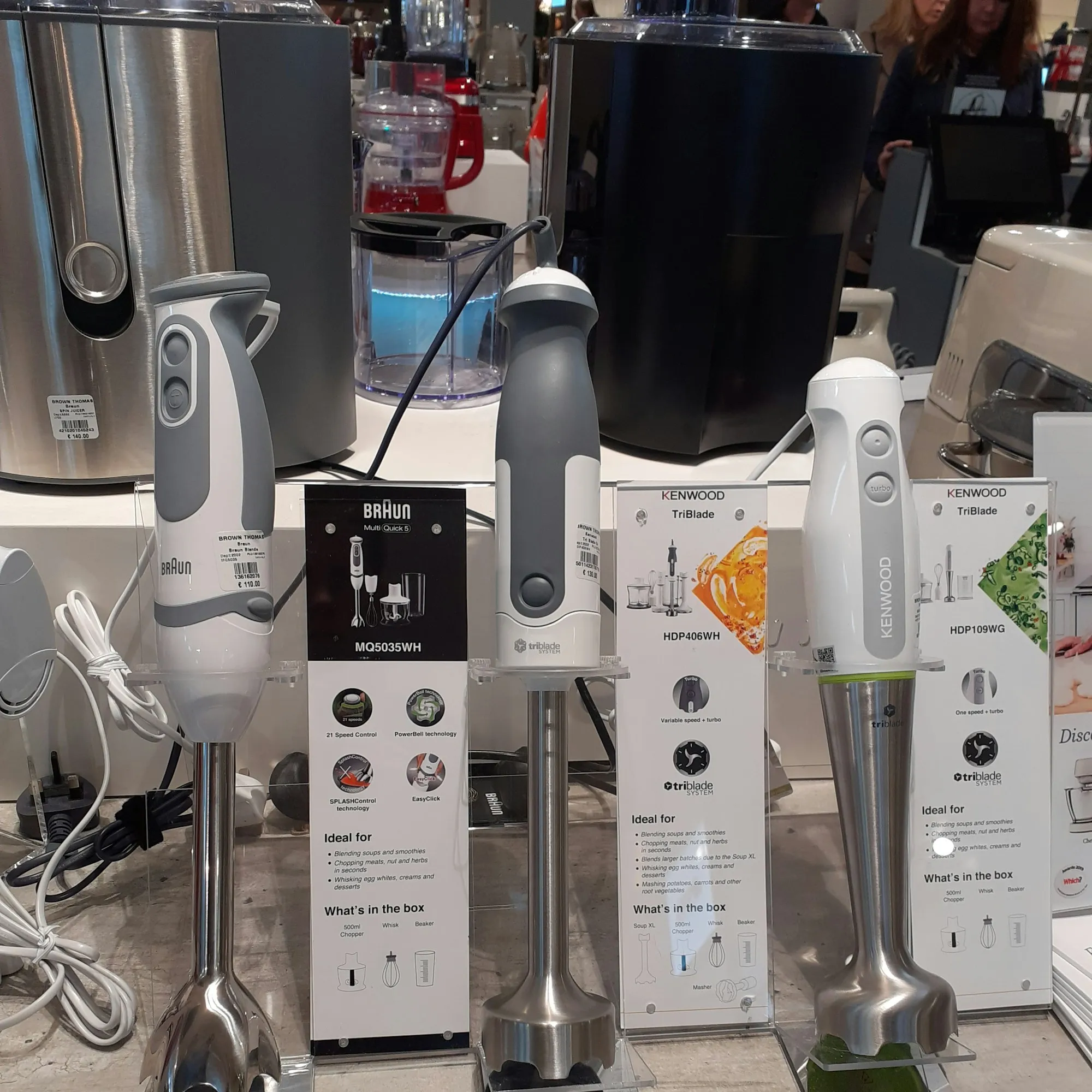
An immersion blender (also called a stick blender or hand blender) is a motor in a handle with a small guarded blade at the end. You put it into the food rather than putting the food into a jug. That makes it compact and easy to clean, and it can make a perfectly good smoothie if you choose the right ingredients.
How to make a smoothie with an immersion blender
- Use a tall, narrow container, such as the beaker that came with the blender or a wide-mouth jar. A narrow container keeps the food around the blade and stops splashes.
- Liquid first. Add milk, juice or yogurt, then soft fruit on top. There needs to be enough liquid to cover the blade.
- Cut firm fruit small and let frozen fruit soften for a few minutes.
- Put the blade at the bottom before switching on, then move it slowly up and down.
- Switch off before lifting it out, or you’ll spray smoothie around the kitchen.
What it does well, and what it doesn’t
| Good at | Not good at |
|---|---|
| Bananas, berries, mango, peaches | Whole ice cubes |
| Yogurt, milk, nut butters | Large chunks of hard frozen fruit |
| Protein powder and oats in liquid | Fibrous kale, celery and ginger skin |
| Single servings | Big batches for several people |
Can you blend ice with an immersion blender?
Generally, not well. The blade guard on most stick blenders is too narrow for full ice cubes to reach the blade, and testers at RTINGS found that even immersion blenders that can reach ice produce poor crushed ice because cubes get caught behind the blades. Some manufacturers’ instructions say ice should only be crushed with a separate chopper attachment designed for it.
If you want a cold smoothie, use frozen fruit cut into small pieces, chilled milk or yogurt, or a little crushed ice. Check your model’s manual before blending anything frozen.
Hand blender, stick blender, immersion blender: are they the same?
Yes. All three names describe the same handheld appliance. In the UK, “hand blender” is most common; in the US, “immersion blender” is. Don’t confuse them with a hand mixer, which has beaters for cake batter and whipping cream.
Can an immersion blender replace a countertop blender?
It depends on what you make:
- Yes, if you mostly make soups (you can blend straight in the pot), sauces, mayonnaise, baby food and soft-fruit smoothies. A stick blender takes up a drawer instead of counter space, and you rinse the blade under the tap instead of washing a jug.
- No, if you regularly make frozen drinks, ice-heavy smoothies, green smoothies with lots of raw kale, or large batches. A countertop blender has a bigger motor and a jug shaped to keep pulling ingredients back into the blades.
Many models come with a chopper bowl and whisk attachment, which make them more versatile in a small kitchen.
Cleaning and safety
- Unplug the blender before touching the blade or changing attachments.
- Rinse the blade end straight after use. A few seconds of running it in a beaker of warm soapy water cleans most of it.
- Check whether the shaft is dishwasher-safe before putting it in the dishwasher; the motor body never is.
- Don’t use it in non-stick pans unless the manufacturer says it is safe; the blade guard can scratch the coating.