French Door Fridges: Benefits and Drawbacks
Quick answer
A French door fridge puts the fresh-food section at eye level behind two narrow doors, with a pull-out freezer drawer below. The main benefits are easier access, full-width shelves for wide platters and a smaller door swing. The trade-offs are price and energy: bottom-freezer layouts generally use more electricity than a top-freezer fridge of the same size, and a through-the-door ice maker adds more.
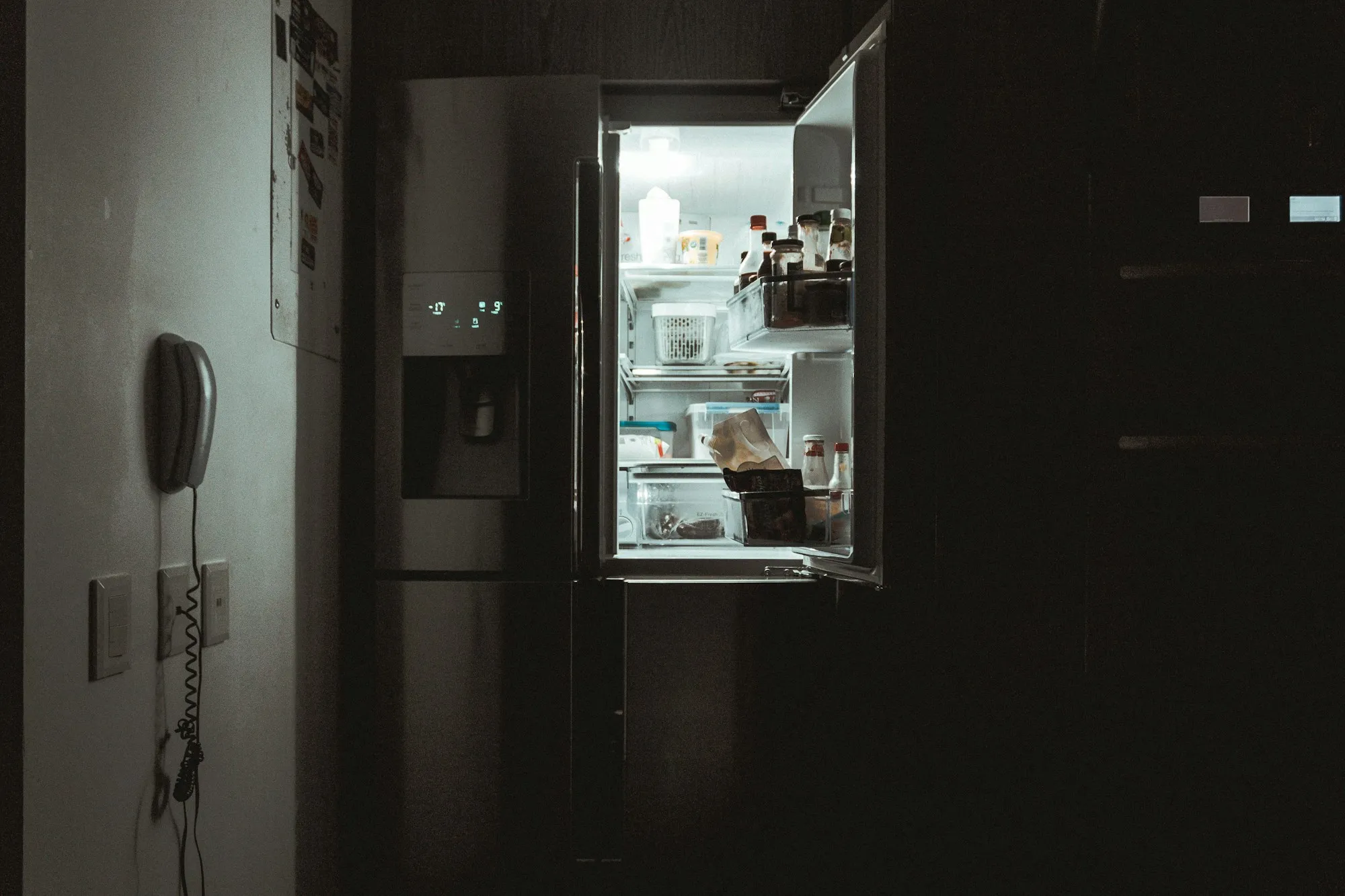
A French door fridge has two side-by-side doors on the fresh-food section at the top and a freezer drawer underneath. It sits between a bottom-freezer fridge and a side-by-side: you get the width of a single compartment, but each door is only half as wide.
The benefits
Fresh food sits at eye level
You open the fridge many more times a day than the freezer, so putting the fresh-food section on top means less bending. Crisper drawers end up around knee to waist height instead of on the floor.
Full-width shelves
Because there is no divider down the middle (unlike a side-by-side), the shelves run the full width of the cabinet. A sheet cake, a party platter or a pizza box fits flat.
Narrower door swing
Each door is half the cabinet width, so it needs less clearance to open. That helps in galley kitchens or where the fridge sits next to an island. You can also open just one door to grab milk.
A pull-out freezer drawer
The freezer is a drawer rather than a door, usually with a sliding upper basket. Food is easier to see from above, though small items can get buried at the bottom.
Room for tall items in the doors
Two door-bins mean more door storage than a single-door bottom freezer, and the bins are often deep enough for gallon jugs and wine bottles.
The drawbacks
Higher energy use than a top-freezer
The layout itself costs energy. Virginia Cooperative Extension notes that top-freezer fridges use less energy than side-by-side and bottom-freezer models of the same size, and that automatic ice makers and through-the-door dispensers add to the total. Many French door models have both.
If running cost matters, compare the yellow EnergyGuide label (the annual kWh figure) rather than the door style, and look for the ENERGY STAR mark. ENERGY STAR certified fridges have to beat the federal minimum efficiency standard.
Price
French door fridges usually cost more than top-freezer or basic bottom-freezer models of similar capacity. Features such as door-in-door bins, flexible-temperature drawers and Wi-Fi add to the price without adding storage.
The door seal in the middle
Where the two doors meet, one of them has a flip-down mullion (a hinged strip) that the other door seals against. If it gets bent or sticks, the doors may not seal properly. It is worth checking that it moves freely in the store.
Freezer organisation
A deep drawer can be harder to organise than freezer shelves. Bags and boxes tend to end up in a pile.
Is a French door fridge worth it?
It is a good fit if you want eye-level fresh food and wide shelves and you have the budget and floor space. If your priority is the lowest running cost or the lowest price, a top-freezer fridge of the same size usually wins on both.
For small kitchens, check the cabinet width, height and the door clearance before you buy. Counter-depth French door models exist but give up some capacity to sit flush with the worktop. If you only need a small fridge, see our mini fridge running costs by size.